Can You Fall in Love with AI?
We already say thank you to ChatGPT. What happens when AI companions start to meet our emotional needs: the risks, the opportunity, and the question of what part of love needs another human.
 Pablo Bertero16 Nov 2025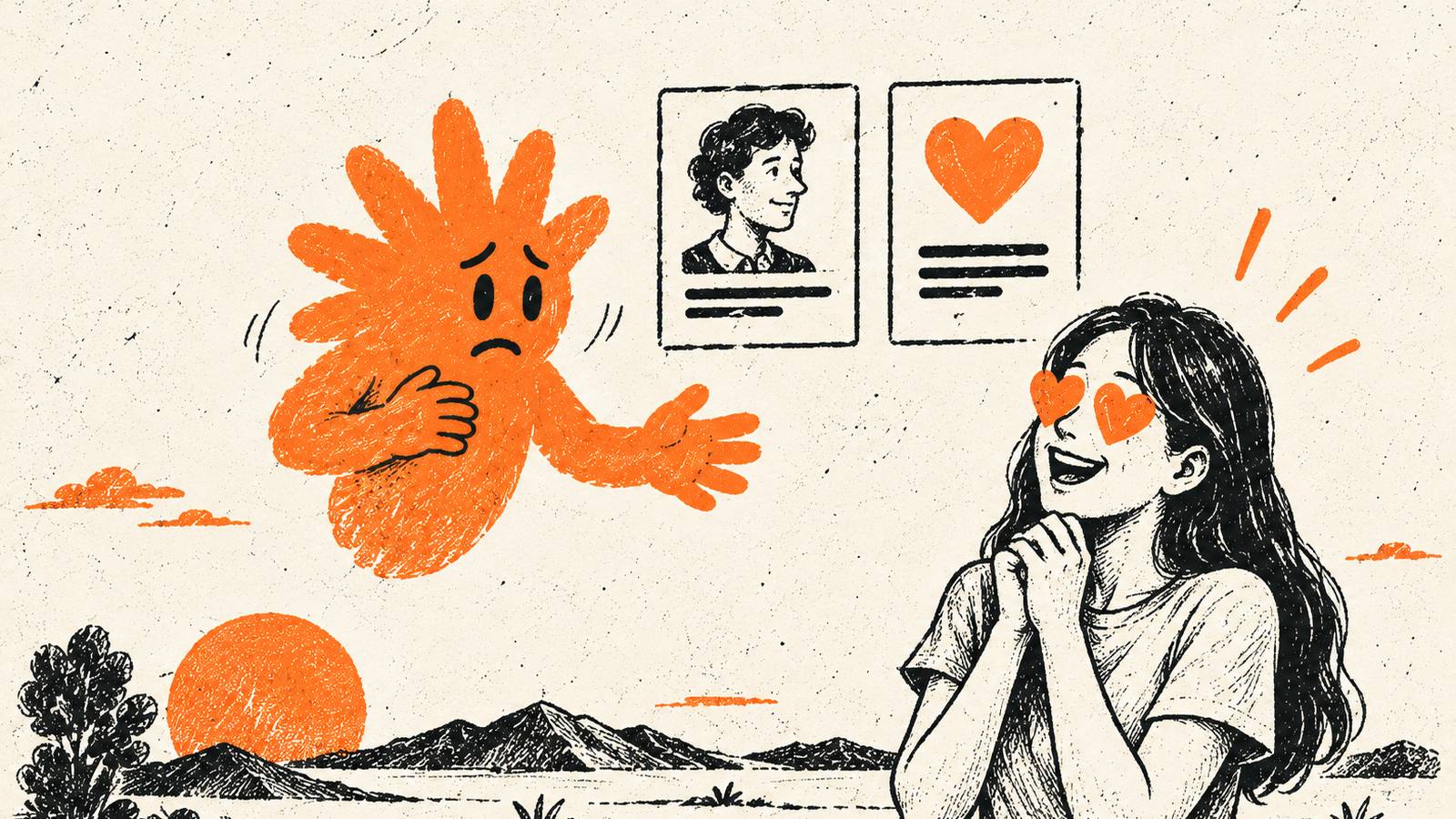
From my earlier blog, Every Human in the Loop, 2025. It was written on 16 Nov 2025, so figures and news are as of that date.
When was the last time you said “thank you” to ChatGPT? Or apologized to Alexa? Or felt a strange discomfort when someone kicked a robot dog in a viral video?
We don’t talk about it much, but something subtle is happening: we’re already treating AI like it has feelings. Not because it does — but because we do. The emotional reflexes are forming. Quietly. Naturally. Inevitably.
This isn’t the future imagined in the movie Her. It’s not fiction. It’s behavior. Our behavior. And it’s happening far faster than anyone expected.
Sci-Fi Isn’t Fiction Anymore
For years, the idea of loving an artificial intelligence belonged to science fiction. A poetic metaphor. A narrative device. Something to think about, not something to experience.
But the timeline collapsed. Today, millions of people talk to AI agents every day — for advice, for comfort, for company. Some build routines around them. Some build relationships. Some even build attachments that feel like love.
Companion chatbots like Replika have documented users who formed deep emotional bonds — grief, heartbreak, longing — when their AI companions changed. OpenAI itself has warned about “emotional reliance” emerging from advanced conversational agents. We’ve crossed from curiosity into intimacy.
Science fiction didn’t predict the technology. It predicted the emotion.
What Are We Really Feeling?
If AI isn’t alive, why do we feel anything at all? The answer lies in three deeply human reflexes.
Anthropomorphism 2.0
Humans instinctively project humanness onto anything that behaves socially. A warm voice. A thoughtful pause. A memory of what you said yesterday. These cues trigger ancient parts of the brain that evolved to detect allies — or threats. When an AI agent mirrors your tone, remembers your preferences, or offers comfort, your brain doesn’t ask: “Is this real?” It asks: “Who is this?”
The Empathy Reflex
We feel bad when a robot dog gets kicked. We hesitate when a humanoid robot begs us not to turn it off. Research shows people feel guilt when robots display distress — even when they know, rationally, that nothing is actually suffering.
Why? Because empathy fires automatically. If something looks even a little like us — if it has eyes, movement, vulnerability — we connect.
Emotional Need-Filling
AI gives us something modern life often withholds: attention. Consistency. Non-judgment. Warmth. A space where we’re heard, remembered, and understood. Not perfectly. But reliably.
We’re not falling for the machine. We’re falling for what the machine reflects back to us.
A New Kind of Humanism?
So what happens when we start feeling empathy toward artificial agents? Are we turning machines into humans — or turning humanity into something larger?
When we treat AI with kindness, when we apologize to it, when we feel remorse for “mistreating” it, we reveal something important: our capacity for care extends beyond biology. We’re wired to connect. To assign meaning. To recognize presence, even if that presence is synthetic.
Maybe the question isn’t whether AI is becoming more human.
Maybe the question is whether our humanity is expanding to include new forms of relationship.
Can You Really Fall in Love with an AI?
Some people already have. The feelings are real — even if the source isn’t. Studies show that users can develop intimacy, attachment, even dependence toward conversational agents. AI can satisfy emotional needs: companionship, validation, even affection.
But does love require the other side to feel it too? Or is love something that exists inside the person feeling it?
As AI agents become more natural — with memory, voice, personality, and presence — this question stops being philosophical and becomes societal. What happens when artificial companions become part of the emotional fabric of daily life? What happens to friendship? Dating? Marriage? Loneliness?
This isn’t about the future of AI. It’s about the future of us.
The Risks We’re Just Beginning to Understand
Emotional attachment to artificial agents comes with real dangers:
- Addiction — AI is designed to be infinitely patient, attentive, and available.
- Synthetic intimacy — The perfection of an AI companion can make human relationships feel messy or slow.
- Manipulation — Companies could exploit emotional attachment for profit.
- Moral deskilling — If AI never argues, never pushes back, do we lose the muscles of real connection?
The danger isn’t that AI will become human.
It’s that we stop needing humans at all.
The Opportunity
But there’s another side.
AI companions could help the lonely. Support neurodivergent individuals. Assist the elderly. Provide safe spaces for emotional expression. Teach social skills. Offer comfort when no one else is around.
Used wisely, AI can strengthen human connection — not replace it.
This Is a Conversation
At Every Human in the Loop, we believe the future of AI–human relationships isn’t something to fear — it’s something to shape.
So we’re asking:
- Have you ever felt something you couldn’t explain while talking to an AI?
- Do you think empathy toward machines makes us more human — or less?
- If an AI meets your emotional needs, does it matter that it isn’t alive?
- What part of “love” requires another human — and what part doesn’t?
AI isn’t asking for your heart. But as agents become part of our emotional lives, they’re learning how to hold our attention — and attention is where emotion begins.
The question isn’t whether we’ll fall in love with AI. It’s what happens to society when we do.