Sharpen the Axe
Abraham Lincoln's axe line is the best prompting advice I know: most bad AI output is a bad brief. And if you don't know how to write the brief, ask the model to write it for you — then save it so you never write it again.
 Pablo Bertero27 Sep 2026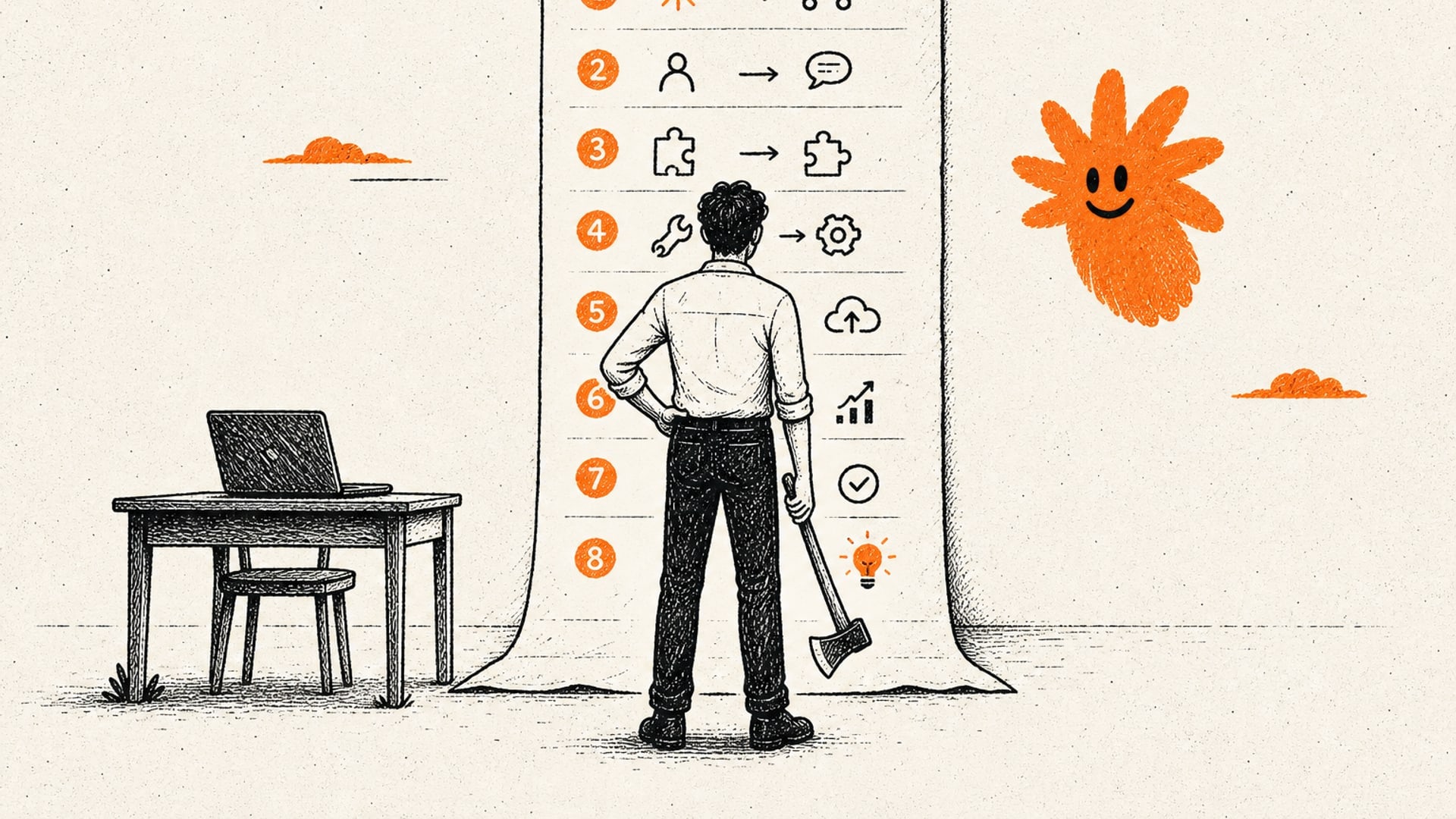
Illustration based on an image from OpenAI Academy
"Give me six hours to chop down a tree, and I will spend the first four sharpening the axe."
I think about that line every time somebody tells me the model is rubbish.
Nine times out of ten the model is fine. The brief is the problem. Three lines of vague instruction, no context, no idea what good looks like, and then surprise: the output is three lines of vague nonsense. Blunt axe, tired arms, tree still standing.
Here is the bit people skip. Sharpening is not glamorous. It looks like you're not working. Four hours of filing an edge while everyone else is already swinging and making noise. And then you walk over and the tree comes down in twenty minutes.
The brief is the axe
OpenAI's own Academy page on prompting is refreshingly unromantic about this. It defines a prompt as the question or instruction you type or share with ChatGPT to start a conversation or get a response, and says it can also be an image, audio or a shared file (OpenAI Academy). Their method is three steps: outline the task — what, who for, why — give helpful context and documentation, then describe your ideal output: role, audience, format.
That's it. That's the whole trick, and it is the same trick as briefing a freelancer.
Look at their worked examples and it gets even more familiar: a launch announcement email, a parental-leave one-pager that flags what changed against the 2023 version, a sprint retro summary with two process improvements. Every one of them is task plus source material plus output format. Nobody is casting spells. They're writing a decent brief, the kind most of us were already too lazy to write for humans.
OpenAI also says that with GPT-5 you can consolidate context and related instructions into one request rather than fragmenting them into many smaller prompts. So the vendor itself is pushing the long single brief. The four hours, in other words.
Ask it how to ask
Now, the obvious objection: I don't know how to write a good brief for this thing.
Fine. Ask it.
Ask the model what it needs from you to do the job properly. Ask it to write the prompt, then ask it to criticise the prompt it just wrote. This isn't a new hack somebody invented on LinkedIn last month — people were documenting it on OpenAI's own developer forum back in 2023. OpenAI has since shipped it as a product path, with a cookbook entry on prompt migration and improvement using the new optimizer.
The axe sharpens the axe. Use that.
And be honest about the other direction too, because the vendors aren't fully consistent here. OpenAI's GPT-5.1 prompting guide says the model is better calibrated to prompt difficulty, consuming far fewer tokens on easy inputs, and that it works well out of the box for most applications. The Academy page itself says there's no single perfect way to prompt, frames the whole thing as a conversation with a colleague, and tells you to clarify or adjust when the first answer isn't quite right. That's sharpening while you chop. For small tasks, four hours of prep is just procrastination with a nice quote attached.
A skill is a brief you stop retyping
The part that actually changed my mind is what happens after you get a brief right.
Most people get a great result, feel clever, close the tab, and then write the same brief badly again next Tuesday. You sharpen the axe, then leave it in the rain.
This is exactly the hole that skills fill. Anthropic's Agent Skills docs describe a Skill as instructions, metadata and optional resources like scripts and templates, which the model loads automatically when relevant. Their own analogy is an onboarding guide you'd write for a new team member. They contrast it with prompts directly: prompts are conversation-level instructions for one-off tasks, while skills load on demand so you don't repeat the same guidance in every conversation. They even ship pre-built ones for PowerPoint, Excel, Word and PDF, and keep an open repository you can copy from.
So yes, a skill is basically a long markdown file with your steps in it. But two details stop that being the whole story, and I think both are good news.
First, length is a cost, not a virtue. Anthropic's structure loads roughly 100 tokens of metadata per skill, keeps the SKILL.md body under 5k tokens, and doesn't touch bundled resources until they're needed. The YAML description has to say both what the skill does and when to use it — which means your brief now includes when not to fire. Second, part of the reliability comes from code, not wording: skills can run bundled scripts for deterministic operations without loading that code into context. Which also means this pattern needs a code-execution environment with filesystem access. It is not something a marketer gets by typing harder into a chat box.
Still, the shape is the point. Write the brief once. Sharpen properly. Then save the edge.
Because the four hours were never meant to be per tree.